Luke 2
The Story of the Birth of Jesus
Luke tells of Jesus born in Bethlehem, laid in a manger, and announced by angels as Savior and Christ the Lord.
Setting and Context
Luke places the birth of Jesus in the real world of empire, travel, census, poverty, and ordinary people. The Messiah is not introduced in a palace, but in Bethlehem, with shepherds as the first hearers of the angelic announcement.
The Story
Joseph and Mary travel to Bethlehem, where Mary gives birth and lays Jesus in a manger because there is no room for them in the inn. The humility of the scene is striking: the promised Savior enters the world in weakness and obscurity.
Nearby shepherds are watching their flocks when an angel announces good tidings of great joy. The child is identified with royal and saving titles: Savior, Christ, and Lord. Heaven breaks into the night with praise.
The shepherds go to Bethlehem and find Mary, Joseph, and the child. They return glorifying and praising God. Mary keeps these things and ponders them in her heart, inviting readers to do the same.
Meaning and Importance
Mary gives birth to Jesus in Bethlehem and lays Him in a manger. Angels announce the news to shepherds, declaring joy, peace, and the birth of the Savior.
The birth of Jesus shows the humility of the incarnation and the joy of salvation. God's promised King comes near to ordinary people. The announcement is not private sentiment; it is good news for all people.
Biblical Art Connected to This Story

Giotto, circa 1305
Nativity, Birth of Jesus
Giotto makes the Nativity feel human and physical while still framing it as an event of heavenly significance.

Fra Angelico, circa 1437-1446
The Annunciation
The calm order of the image gives visual form to Mary's faithful response to the angelic message.

Sandro Botticelli, circa 1475
The Adoration of the Magi
The gathered figures make the scene feel public, political, and devotional at once.
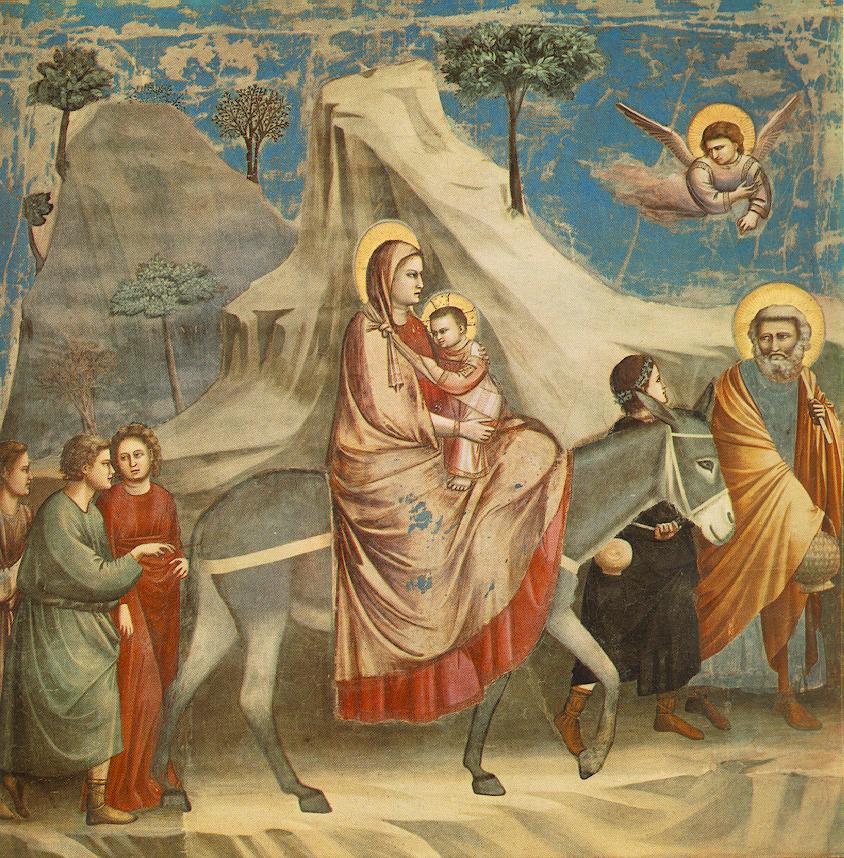
Giotto, circa 1305
Flight into Egypt
The road scene turns Matthew 2 into an image of vulnerability and providential protection.

Rembrandt, 17th century
The Presentation in the Temple
Rembrandt uses darkness and light to make Simeon's recognition feel quiet and holy.
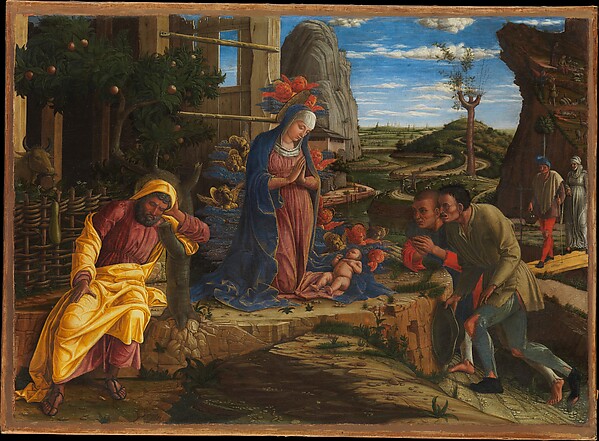
Andrea Mantegna, shortly after 1450
The Adoration of the Shepherds
Mantegna gives the Nativity a spare, rocky setting, making the shepherds' adoration feel humble, direct, and grounded.
Key KJV Verses
Luke 2:7
“And she brought forth her firstborn son, and wrapped him in swaddling clothes, and laid him in a manger; because there was no room for them in the inn.”
Read Luke 2Luke 2:10
“And the angel said unto them, Fear not: for, behold, I bring you good tidings of great joy, which shall be to all people.”
Read Luke 2Luke 2:11
“For unto you is born this day in the city of David a Saviour, which is Christ the Lord.”
Read Luke 2What This Story Teaches
- Jesus comes in humility, not worldly display.
- The birth announcement is good tidings of great joy.
- The child born in Bethlehem is identified as Savior and Christ the Lord.
Questions about Birth of Jesus
Where is the birth of Jesus in the Bible?
The birth of Jesus is recorded in Matthew 1-2 and Luke 2.
What did the angels say when Jesus was born?
The angels announced good tidings of great joy and proclaimed glory to God and peace on earth.
Related Bible stories
Get new Bible story resources
New Vesper story pages, reader upgrades, and study tools connected to stories like Birth of Jesus.
By joining, you agree to receive Vesper updates. Unsubscribe anytime.