Matthew 2
The Adoration of the Magi in Biblical Art
The Adoration of the Magi became a favorite subject because it joins worship, kingship, prophecy, and the nations coming to Christ.
Bible and Art Context
Botticelli's version places the Christ child at the center of a crowded scene of reverence. The Magi bring royal attention to a child whose kingdom does not look like Herod's.

Public domain
The Adoration of the Magi
Sandro Botticelli, circa 1475, Tempera on panel
The gathered figures make the scene feel public, political, and devotional at once.
Source: Wikimedia Commons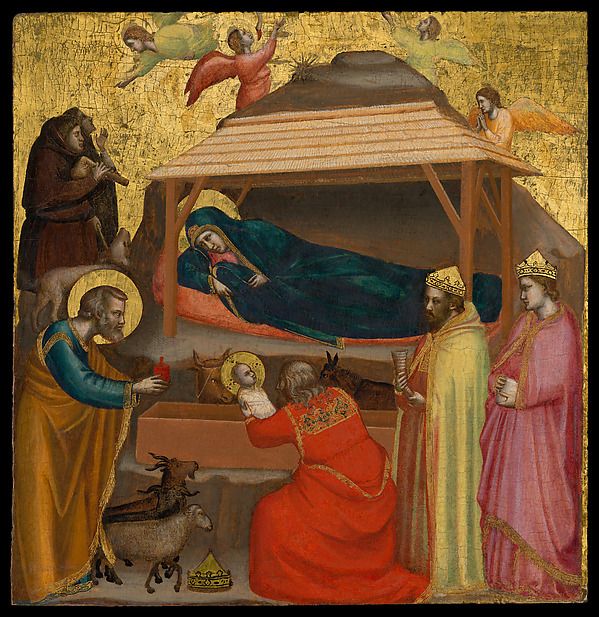
CC0
The Adoration of the Magi
Giotto di Bondone, possibly ca. 1320, Tempera on wood, gold ground
Giotto compresses the visit into a small devotional panel where gold ground, kneeling posture, and gift-bearing focus attention on worship.
Source: The Met Open AccessCC0
The Adoration of the Magi
Giotto di Bondone, possibly ca. 1320, Tempera on wood, gold ground
Giotto makes the Magi's worship feel close and ceremonial, placing Gentile homage inside a gold-ground devotional image.
Source: The Met Open Access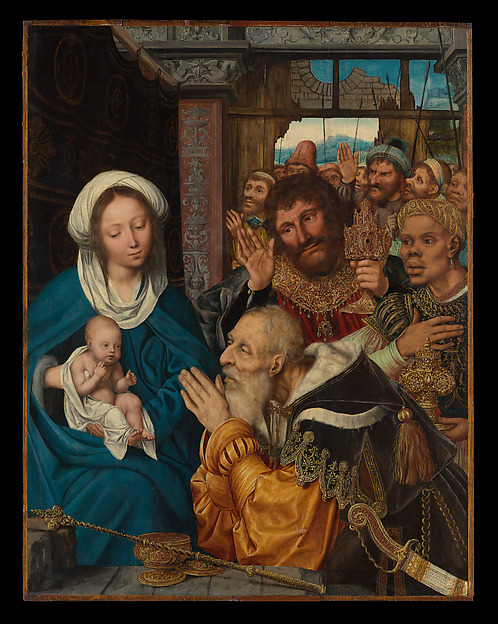
CC0
The Adoration of the Magi
Quinten Massys, 1526, Oil on wood
Massys fills Matthew 2 with rich detail, letting the gifts, architecture, and gathered figures underline Christ as king.
Source: The Met Open AccessQuestions about Adoration of the Magi in Art
Where is the Adoration of the Magi in the Bible?
The visit of the wise men is found in Matthew 2.
Why are the Magi important in biblical art?
They represent worship offered to Christ from beyond Israel and became a visual sign of the nations coming to him.
Related biblical art
Get new Bible art and study updates
New biblical art pages, Scripture context, and reader upgrades connected to scenes like Adoration of the Magi.
By joining, you agree to receive Vesper updates. Unsubscribe anytime.