Matthew 26
The Agony in the Garden in Biblical Art
Gethsemane became a major biblical art subject because it shows Jesus in prayer before betrayal, arrest, and crucifixion.
Bible and Art Context
Mantegna places Christ in a hard landscape while the disciples sleep below. The setting makes the loneliness of prayer feel physical.

Public domain
Agony in the Garden
Andrea Mantegna, circa 1458-1460, Tempera on panel
The sleeping disciples and rocky setting intensify the solitude of Christ's prayer.
Source: Wikimedia Commons
CC0
The Agony in the Garden
Raphael, ca. 1504, Oil on wood
Raphael sets Christ's prayer against the sleeping disciples and approaching Passion, balancing serenity with the pressure of what is coming.
Source: The Met Open AccessCC0
The Agony in the Garden
Raphael, ca. 1504, Oil on wood
Raphael sets Christ's prayer against the disciples' sleep, making Gethsemane a scene of obedience, loneliness, and approaching betrayal.
Source: The Met Open Access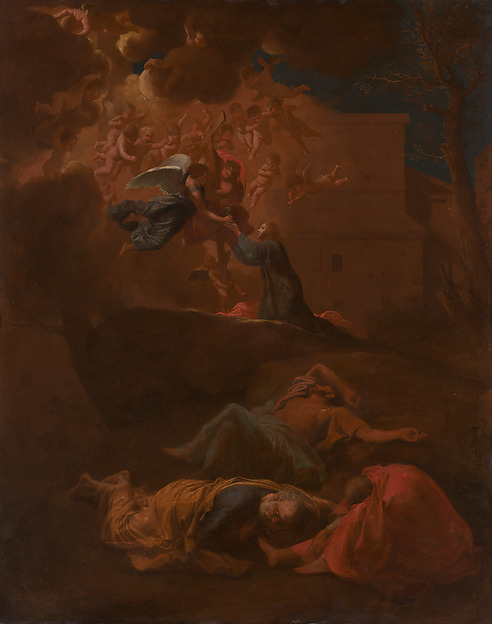
CC0
The Agony in the Garden
Nicolas Poussin, 1626-27, Oil on copper
Poussin gives the garden scene classical severity, concentrating the Passion's inward struggle before the arrest begins.
Source: The Met Open AccessQuestions about Agony in the Garden in Art
Where is the Agony in the Garden in the Bible?
Jesus prays in Gethsemane in Matthew 26, Mark 14, and Luke 22.
Why are the disciples asleep in this scene?
Their sleep emphasizes Jesus' solitude and the weakness of his followers before the Passion.
Related biblical art
Get new Bible art and study updates
New biblical art pages, Scripture context, and reader upgrades connected to scenes like Agony in the Garden.
By joining, you agree to receive Vesper updates. Unsubscribe anytime.