Luke 15:11-32
The Prodigal Son in Biblical Art
The parable of the Prodigal Son has become one of the most painted images of repentance and mercy.
Bible and Art Context
Rembrandt focuses on the son's return rather than his rebellion. The father's hands, the kneeling son, and the watching figures turn the parable into a meditation on grace, resentment, and homecoming.

Public domain
The Return of the Prodigal Son
Rembrandt, circa 1668, Oil on canvas
Rembrandt makes the father's welcome the emotional center of the parable.
Source: Wikimedia Commons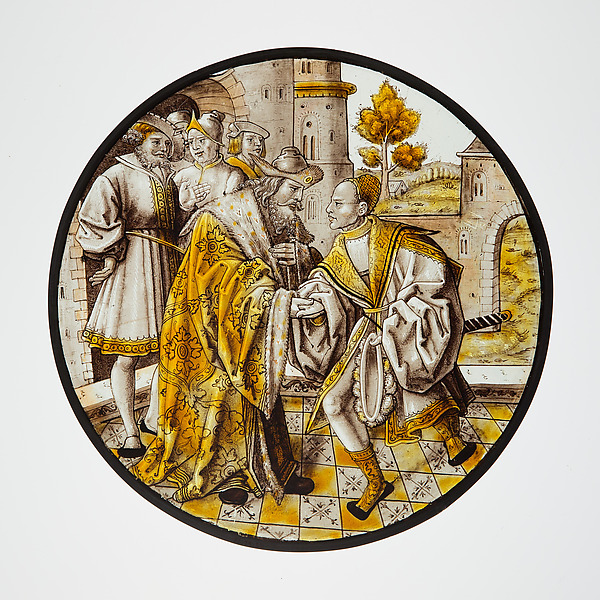
CC0
Roundel with Return of the Prodigal Son
Unknown artist, ca. 1530-35, Colorless glass, vitreous paint, and silver stain
The glass roundel turns the return home into a compact devotional image of repentance and welcome.
Source: The Met Open Access
CC0
The Prodigal Son
Albrecht Durer, ca. 1496, Engraving
Durer chooses the low point of the parable, making the son's hunger and humiliation prepare the way for repentance.
Source: The Met Open AccessQuestions about Prodigal Son in Art
Where is the Prodigal Son in the Bible?
The parable of the Prodigal Son appears in Luke 15:11-32.
What does Rembrandt emphasize in the painting?
Rembrandt emphasizes the father's mercy and the son's exhausted return, with the older brother-like figure watching from the side.
Related biblical art
Get new Bible art and study updates
New biblical art pages, Scripture context, and reader upgrades connected to scenes like Prodigal Son.
By joining, you agree to receive Vesper updates. Unsubscribe anytime.