1 Samuel 17
David and Goliath in Biblical Art
Artists often portray David after the battle, forcing viewers to sit with courage, violence, victory, and mercy.
Bible and Art Context
The Bible emphasizes that David trusts the Lord rather than Saul's armor or Goliath's strength. Caravaggio's version narrows the scene to the aftermath, making the victory feel psychologically charged rather than merely heroic.

Public domain
David with the Head of Goliath
Caravaggio, circa 1607, Oil on canvas
Caravaggio presents the victory without triumphal polish, emphasizing the moral weight of the story.
Source: Wikimedia Commons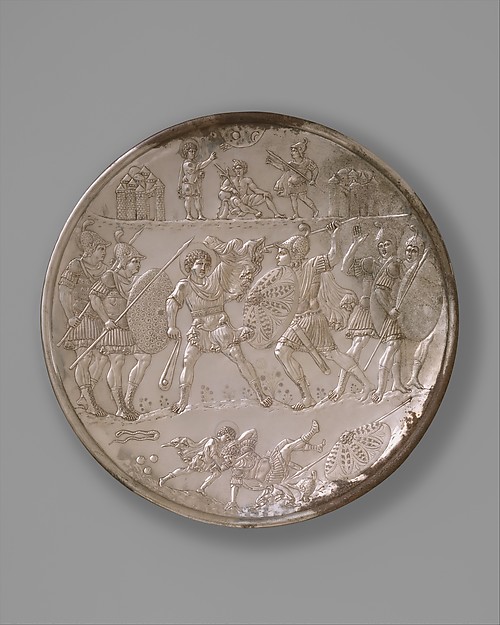
CC0
Plate with the Battle of David and Goliath
Unknown Byzantine artist, 629-30, Silver plate
This luxury object shows how David's victory became an image of divinely aided kingship and courage.
Source: The Met Open Access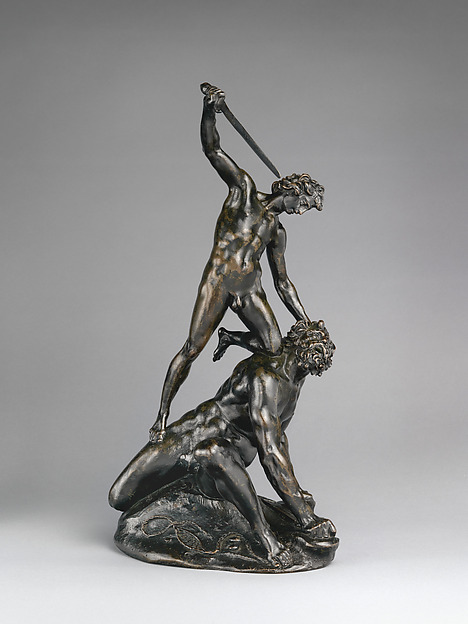
CC0
David and Goliath
Francesco Fanelli, 17th century cast, Bronze
Fanelli shifts the story into sculpture, preserving the tension of David's victory in a compact devotional object.
Source: The Met Open AccessQuestions about David and Goliath in Art
Where is David and Goliath in the Bible?
The story of David and Goliath is found in 1 Samuel 17.
Why did artists paint David after the battle?
The aftermath lets artists explore courage, judgment, humility, and the cost of violence in a single image.
Related biblical art
Get new Bible art and study updates
New biblical art pages, Scripture context, and reader upgrades connected to scenes like David and Goliath.
By joining, you agree to receive Vesper updates. Unsubscribe anytime.