Exodus 14
The Crossing of the Red Sea in Biblical Art
The Red Sea crossing gives artists a sweeping scene of danger, deliverance, water, and freedom.
Bible and Art Context
In Exodus, Israel stands trapped between Pharaoh and the sea. Art of this scene often expands the scale so viewers feel the pressure of pursuit and the wonder of escape.

Public domain
The Children of Israel Crossing the Red Sea
Unidentified artist, 19th century, Painting
The image turns Exodus 14 into a vast passage from fear into deliverance.
Source: Wikimedia Commons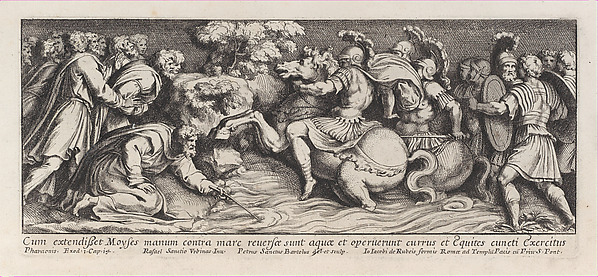
CC0
Moses Parting the Red Sea
Pietro Santi Bartoli, 1650-70, Etching
The print follows Raphael's Vatican imagery, turning the Exodus rescue into a sweeping scene of deliverance and judgment.
Source: The Met Open Access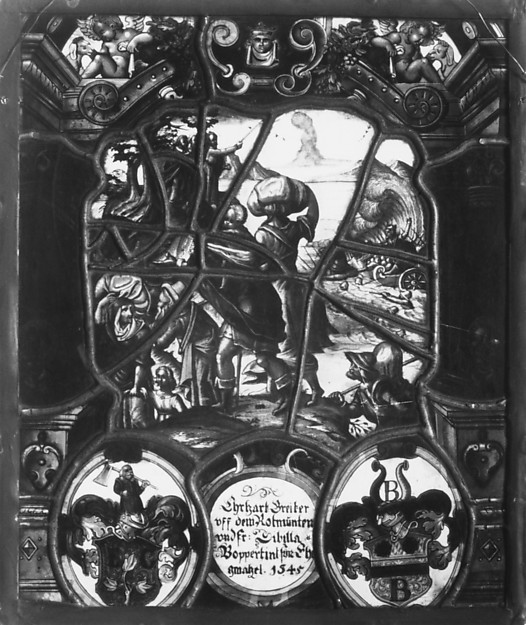
CC0
The Passing Over the Red Sea
St. Gallen, 1545, Stained glass
The stained-glass format turns the Exodus crossing into a luminous church image of rescue, water, and judgment.
Source: The Met Open Access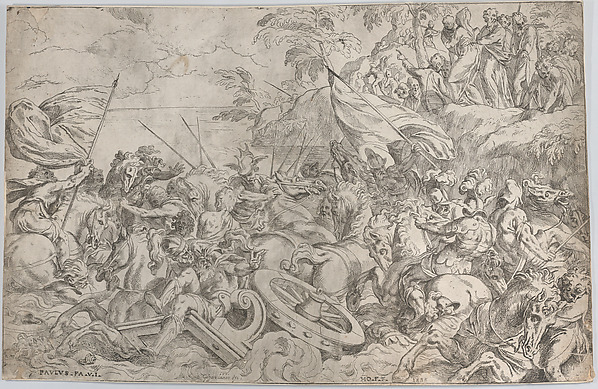
CC0
The Crossing of the Red Sea
Orazio Farinati, 1583, Etching
Farinati treats the crossing as a crowded moment of movement and danger, with Israel passing through while Egypt is overwhelmed.
Source: The Met Open AccessQuestions about Crossing the Red Sea in Art
Where is the Red Sea crossing in the Bible?
The crossing of the Red Sea is found in Exodus 14.
Why is the Red Sea crossing important in biblical art?
It gives artists a powerful visual image of salvation, judgment, and a people passing from bondage toward covenant life.
Related biblical art
Get new Bible art and study updates
New biblical art pages, Scripture context, and reader upgrades connected to scenes like Crossing the Red Sea.
By joining, you agree to receive Vesper updates. Unsubscribe anytime.