John 19
The Crucifixion of Jesus in Biblical Art
The Crucifixion became one of the central subjects of Christian art because it gathers suffering, kingship, sacrifice, and salvation into one scene.
Bible and Art Context
Velazquez strips away much of the surrounding narrative and places Christ against darkness. The restraint gives the image a severe stillness, pushing attention toward the body on the cross.

Public domain
Christ on the Cross
Diego Velazquez, circa 1632, Oil on canvas
The painting is spare and still, making the Crucifixion feel solemn rather than theatrical.
Source: Wikimedia Commons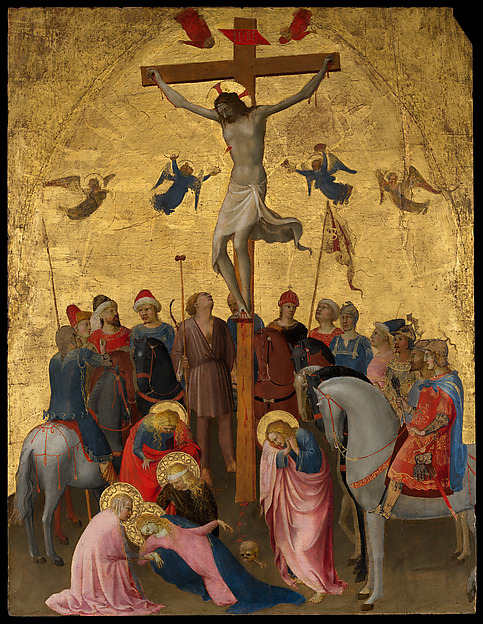
CC0
The Crucifixion
Fra Angelico, ca. 1420-1423, Tempera on wood, gold ground
Fra Angelico's gold-ground Crucifixion keeps the image devotional, joining suffering with worshipful stillness.
Source: The Met Open Access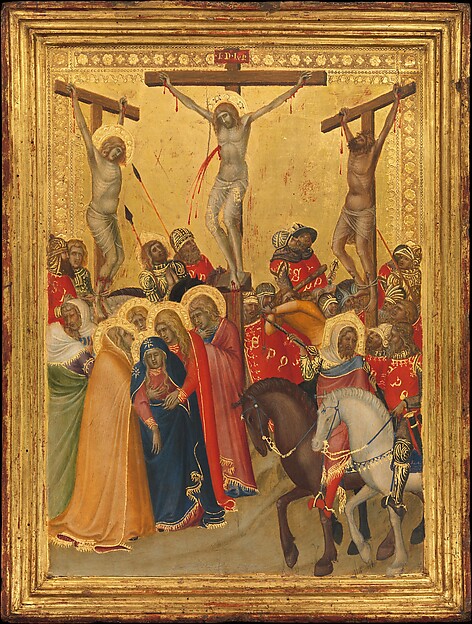
CC0
The Crucifixion
Pietro Lorenzetti, 1340s, Tempera and gold leaf on wood
Lorenzetti gathers grief, spectators, and sacred drama around the cross, showing the Crucifixion as both public execution and theological center.
Source: The Met Open Access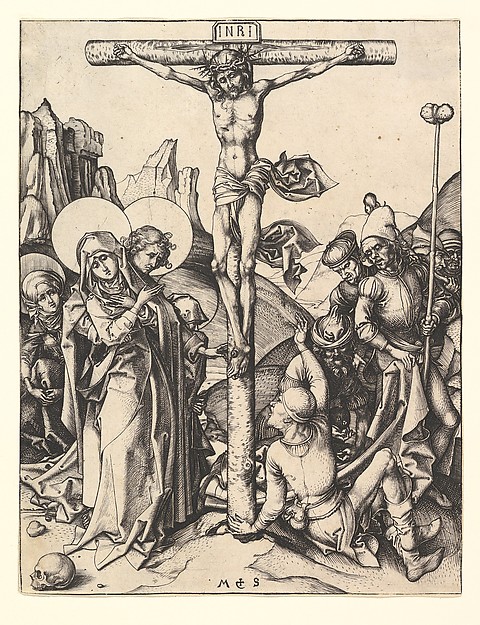
CC0
Crucifixion
Martin Schongauer, ca. 1475-85, Engraving
Schongauer's engraving makes the Passion portable and reproducible, showing how printed biblical art carried devotional scenes widely.
Source: The Met Open AccessQuestions about Crucifixion in Art
Where is the Crucifixion in the Bible?
The Crucifixion is recorded in all four Gospels. This page links to John 19.
Why is the Crucifixion so common in Christian art?
It is central to Christian theology and gives artists a concentrated image of suffering, sacrifice, and redemption.
Related biblical art
Get new Bible art and study updates
New biblical art pages, Scripture context, and reader upgrades connected to scenes like Crucifixion.
By joining, you agree to receive Vesper updates. Unsubscribe anytime.