Luke 10:25-37
The Good Samaritan in Biblical Art
The Good Samaritan has often been painted as a scene of costly compassion.
Bible and Art Context
Van Gogh painted the scene after Delacroix while living through deep personal struggle. The image makes mercy physical: the Samaritan bends under the weight of lifting a wounded stranger.

Public domain
The Good Samaritan
Vincent van Gogh, after Eugene Delacroix, 1890, Oil on canvas
Van Gogh turns neighbor-love into bodily effort, not vague sentiment.
Source: Wikimedia Commons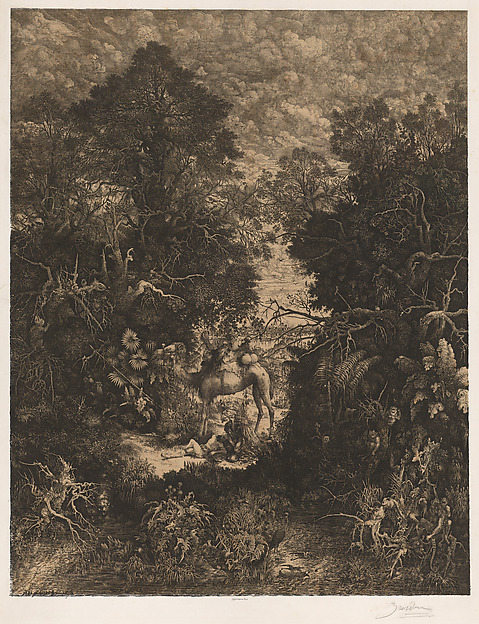
CC0
The Good Samaritan
Rodolphe Bresdin, 1861, Lithograph
Bresdin surrounds the parable with dense landscape detail, making the act of mercy stand out inside a difficult road.
Source: The Met Open Access
CC0
The Good Samaritan
Rembrandt van Rijn, 1633, Etching, engraving, and drypoint
Rembrandt shifts the emphasis toward practical mercy, showing compassion carried all the way to care and shelter.
Source: The Met Open AccessQuestions about Good Samaritan in Art
Where is the Good Samaritan in the Bible?
The parable of the Good Samaritan is found in Luke 10:25-37.
Why is the Good Samaritan important in art?
The subject lets artists depict mercy as action: stopping, bending down, lifting, and paying a cost for another person.
Related biblical art
Get new Bible art and study updates
New biblical art pages, Scripture context, and reader upgrades connected to scenes like Good Samaritan.
By joining, you agree to receive Vesper updates. Unsubscribe anytime.