Exodus 14
Moses in Biblical Art
Moses appears in art as prophet, lawgiver, intercessor, and leader of Israel out of bondage.
Bible and Art Context
Later artists often focused on Moses as the lawgiver because the tablets visually identify him at once. This engraving after Michelangelo reflects how Renaissance images shaped later European views of Moses.

CC0
Moses after the sculpture by Michelangelo
Jacob Matham, after Michelangelo, 16th-17th century, Engraving
The tablets and commanding posture present Moses as the visible bearer of the law.
Source: Wikimedia Commons / The Met Open Access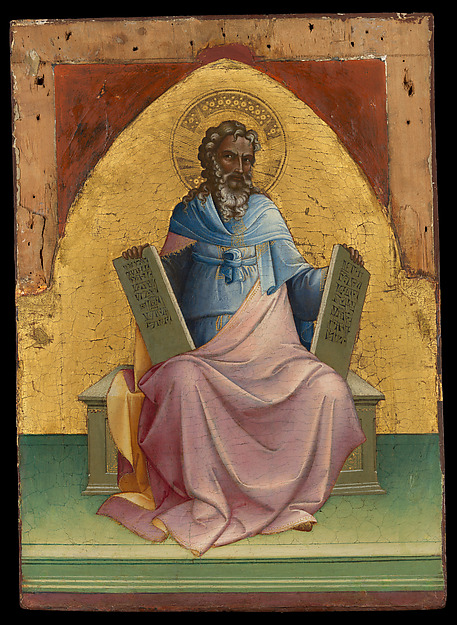
CC0
Moses
Lorenzo Monaco, ca. 1408-10, Tempera on wood, gold ground
Lorenzo Monaco presents Moses as one figure in a larger Old Testament cycle, treating the prophet as a witness to law, deliverance, and covenant memory.
Source: The Met Open Access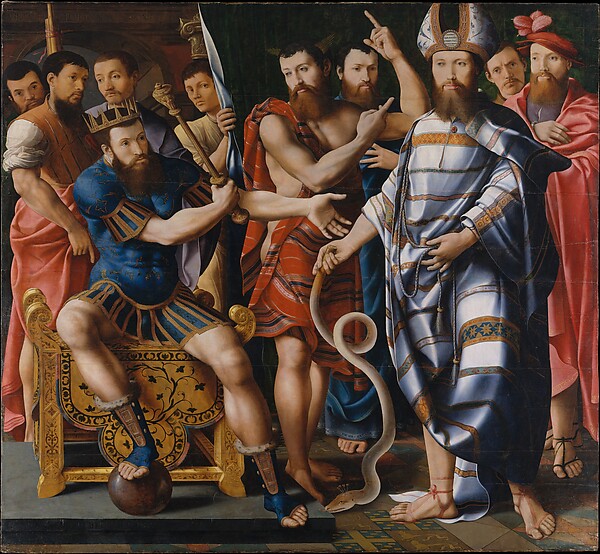
CC0
Moses and Aaron before Pharaoh: An Allegory of the Dinteville Family
Master of the Dinteville Allegory, 1537, Oil on wood
The courtly setting turns the Exodus confrontation into a scene of authority, resistance, and divine command spoken before earthly power.
Source: The Met Open AccessQuestions about Moses in Art
Where is Moses in the Bible?
Moses is central to Exodus, Leviticus, Numbers, and Deuteronomy. This page links to Exodus 14.
Why is Moses often shown with tablets?
The tablets identify Moses as the mediator of the law given at Sinai.
Related biblical art
Get new Bible art and study updates
New biblical art pages, Scripture context, and reader upgrades connected to scenes like Moses.
By joining, you agree to receive Vesper updates. Unsubscribe anytime.