Acts 2
Pentecost in Biblical Art
Pentecost gives artists a scene of prayer, fire, speech, and the birth of the church's public witness.
Bible and Art Context
El Greco stretches the figures upward toward the descending Spirit. The elongated forms and vivid light make Pentecost feel like a spiritual event breaking into ordinary space.

Public domain
The Pentecost
El Greco, circa 1600, Oil on canvas
El Greco turns Acts 2 into a vertical rush of light, flame, and Spirit-filled witness.
Source: Wikimedia Commons
CC0
Plaque with the Pentecost
Unknown artist, ca. 1150-1175, Champleve enamel on copper
This medieval enamel turns Pentecost into a compact liturgical image, with fire and gathered figures arranged for contemplation.
Source: The Met Open AccessCC0
Plaque with the Pentecost
Unknown artist, ca. 1150-75, Champleve enamel and gilded copper
The enamel plaque turns Acts 2 into a compact image of gathered apostles, heavenly fire, and the birth of the church's public witness.
Source: The Met Open Access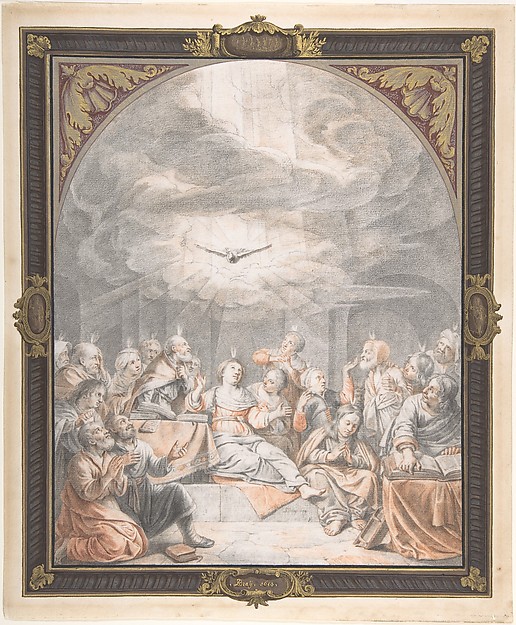
CC0
The Pentecost
Salomon de Bray, early to mid-17th century, Red and black chalk, graphite, gouache, and gold paint
De Bray treats Pentecost as a studied composition of gathered bodies and descending divine presence.
Source: The Met Open AccessQuestions about Pentecost in Art
Where is Pentecost in the Bible?
Pentecost is described in Acts 2.
Why is fire used in Pentecost art?
Acts describes divided tongues like fire resting on the disciples, so artists use flame to show the Spirit's visible presence.
Related biblical art
Get new Bible art and study updates
New biblical art pages, Scripture context, and reader upgrades connected to scenes like Pentecost.
By joining, you agree to receive Vesper updates. Unsubscribe anytime.