Joshua 6
The Walls of Jericho in Biblical Art
The fall of Jericho has long been pictured as a scene of faith, procession, trumpet blast, and sudden collapse.
Bible and Art Context
Joshua 6 presents Jericho as a victory given by the Lord rather than won by ordinary siege tactics. Art of the scene often contrasts disciplined obedience with the dramatic collapse of the city walls.
Public domain
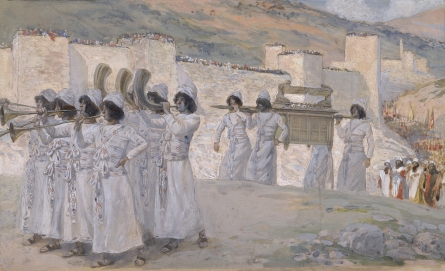
The Seven Trumpets of Jericho
James Tissot, circa 1896-1902, Opaque watercolor over graphite
Tissot focuses on the procession before collapse, making obedience, ritual movement, and patient faith carry the drama.
Source: Wikimedia Commons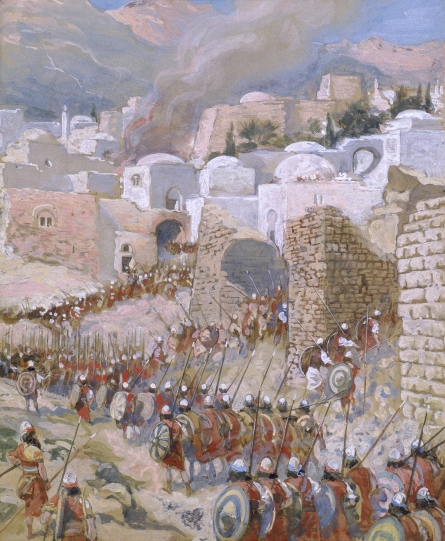
Public domain
The Taking of Jericho
James Tissot, circa 1896-1902, Opaque watercolor over graphite
The companion scene moves from procession to aftermath, showing Jericho as both a military event and a theological turning point.
Source: Wikimedia Commons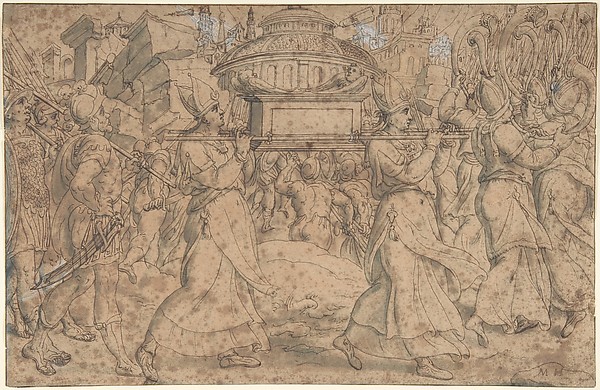
CC0
The Fall of Jericho
Gerard van Groeningen, 1563-73, Black chalk, pen and brown ink, wash, heightened with white
Van Groeningen turns Joshua 6 into a broad siege composition, emphasizing the city, the procession, and the collapse of human defenses.
Source: The Met Open Access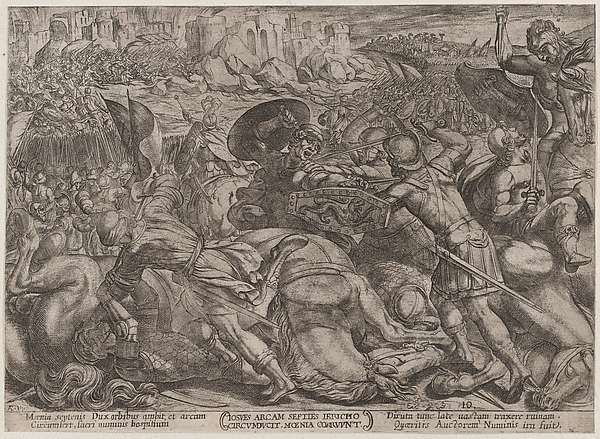
CC0
The Fall of Jericho
Antonio Tempesta, ca. 1590-1610, Etching
Tempesta compresses ritual procession and military action into a printed battle scene from the Old Testament.
Source: The Met Open AccessQuestions about Walls of Jericho in Art
Where is Jericho in the Bible?
The fall of Jericho is recorded in Joshua 6.
Why are trumpets important in Jericho art?
Joshua 6 describes priests blowing trumpets before the walls fall, so artists often use the trumpets to show obedience before victory.
Related biblical art
Get new Bible art and study updates
New biblical art pages, Scripture context, and reader upgrades connected to scenes like Walls of Jericho.
By joining, you agree to receive Vesper updates. Unsubscribe anytime.